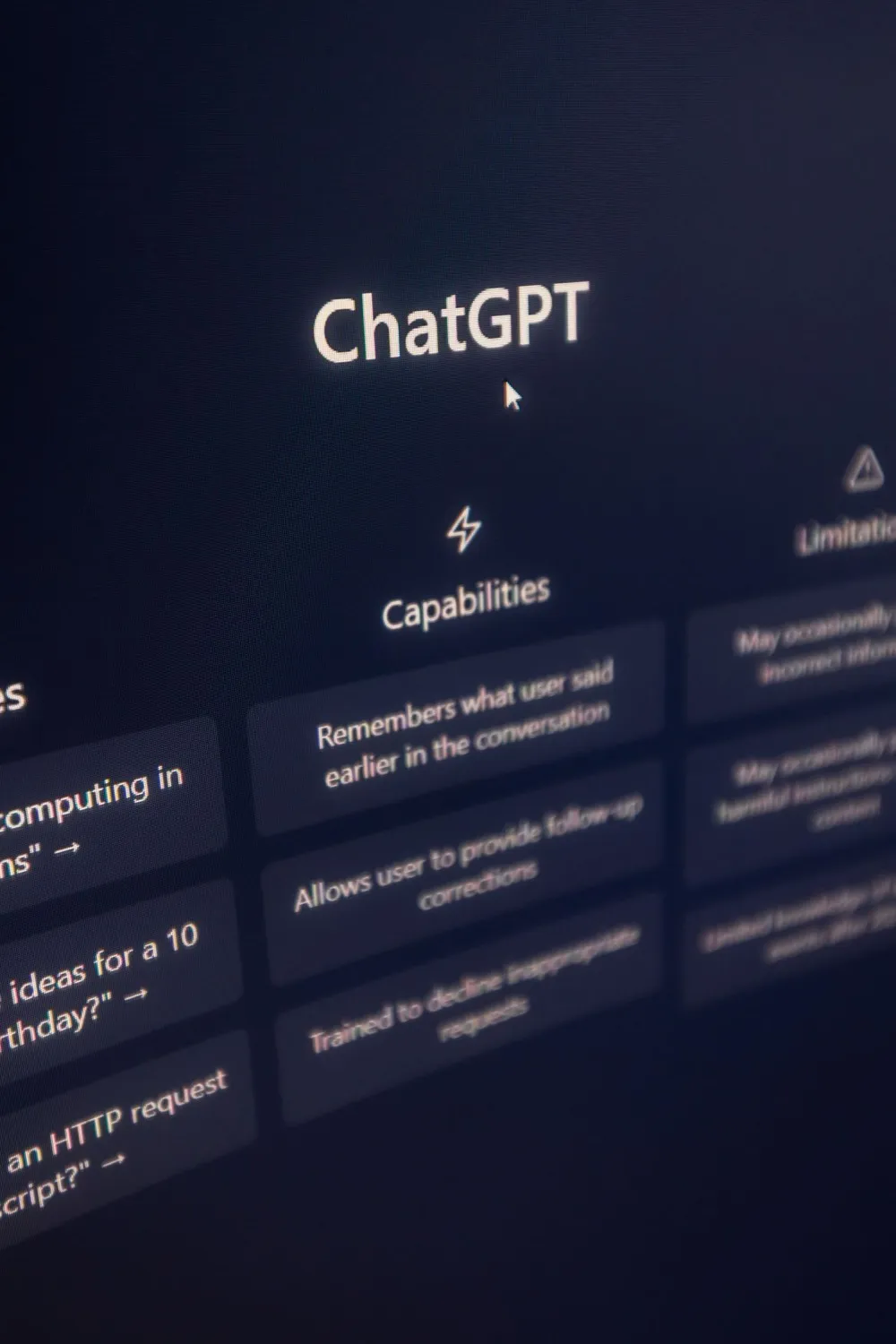
It is an increasingly common scenario. A business upgrades to a paid AI platform like ChatGPT or Claude, gives the team access, and waits for immediate results. Months pass, but the invoices still go out exactly as they always have, the software licenses sit largely unused, and leadership begins to question the ROI.
Operating in this space, we see this story every week, regardless of industry or company size.
The issue isn’t the technology, as today’s models are more than capable of handling most requests. The real problem is treating a ChatGPT subscription like a strategy. It’s definitely a powerful tool, but the true value of AI only shows up when it becomes structurally integrated into daily operations. Otherwise, it’s just another redundant software expense.
Research consistently backs this up. Two-thirds of Australian small businesses now use AI in some capacity, yet only about one in twenty (5%) are fully set up to extract real, measurable value from it.1 And this challenge extends well beyond small businesses. A 2025 MIT study of 300 corporate AI projects found that 95% delivered no significant return.2 In other words, even companies with seemingly unlimited budgets and dedicated innovation teams are struggling to make the implementation stick.
So if the models aren’t the constraint, what is? The real challenge is far more traditional. It requires clearly defining what the tool is for and doing the methodical work of embedding it into how your business actually runs.
The Reality of “Using AI”
In our experience working with companies across Australia, most of them say they are “using AI,” but they usually refer to a few isolated productivity wins. Your sales lead might be drafting proposals in half the usual time. A PM figures out how to drop a messy client thread into a chat window to get a clean summary for the Monday meeting.
These are genuinely useful habits and are certainly worth encouraging. However, they remain private habits, and, as such, the productivity gains will not offset the investment. They live entirely within individual browser tabs. If that sales lead takes two weeks of leave, their enhanced efficiency leaves the office with them. You have made a few individuals faster, but you have not fundamentally upgraded the business.
You Are Not Falling Behind
Let’s clear up a common misconception. You are not falling behind. The constant industry noise and endless AI webinars are designed to create the illusion that your competitors have already automated their entire operations. Let me tell you the truth: they haven’t.
Most businesses of a similar size are in the exact same position, experimenting with ChatGPT in a browser tab here and there, but with no truly autonomous systems in place. Being a few months late to adopting a chatbot costs your business very little, but being the first in your industry to build a background system that reliably reclaims ten hours a week? That’s a competitive advantage that compounds rapidly.
Rethinking the AI Strategy
You do not need a lengthy, forty-slide AI transformation strategy to get started. In our experience, in fact, attempting to overhaul an entire company’s ways of working at once typically leads to stalled projects and internal friction. Change-management research consistently shows people absorb change only in limited doses. The most effective approach is therefore much narrower and far more practical.3
Select one specific task and automate it thoroughly, using your own metrics to rigorously demonstrate the return on investment before moving on to the next bottleneck. While this iterative process provides a clear foundation for success, it is important to anticipate potential challenges such as accurately capturing all relevant costs and benefits, resistance to process change among staff, and unforeseen complexities in integrating automation within existing workflows. Addressing these obstacles early can help ensure that each automation initiative delivers sustained value and avoids disruptions to core operations. If you’re unsure where to start, our audit is designed to help you identify these high-impact opportunities and common challenges.
The initial task you choose matters significantly more than the software platform you select. The ideal target is almost always dull. It might be invoicing data entry, or it could be managing inbound quotes that go cold because follow-ups fall outside standard job descriptions. Rather than seeking a highly visible pilot project, focus on the repetitive administrative work that consumes a large share of your team’s weekly capacity. Time saved means people in your organisation can now focus on more meaningful work, and that’s what real productivity gains look like.
A few tips. Before building any automation, document three baseline metrics: the total time required to complete the task, how often the task is repeated (per week/fortnight/month), and the frequency of human error.
Writing down these numbers is a step many skip, but it forces you to critically look at your existing SOP. And often, a specific task is a headache not because it’s manual, but because the underlying process is disorganised. Automating a broken process without understanding what’s broken simply produces the wrong outcome much faster. Sort the workflow out first, then automate the clean version. Plus, without measuring a baseline, it is impossible to accurately evaluate whether the automation was worth the investment.
Systems Versus Habits
A habit is when a staff member remembers to open ChatGPT, paste data in, copy the answer out, and proceed with their day. While convenient, it relies entirely on human memory and available time.
A system operates differently. It functions automatically in the background. For instance, whenever an invoice arrives in a designated inbox, it is read and categorised by AI, entered directly into Xero, and queued for approval without anyone clicking a button. A system lives seamlessly where the work already takes place.
This is also the point where AI transitions from a flat monthly subscription to a competitive advantage, but it’s essential to be fully transparent about the associated costs. Developing a targeted automation typically requires an initial investment of a few thousand dollars to build, followed by nominal ongoing monthly operational costs to maintain stability. However, this investment grants you a workflow that operates autonomously. You’re paying for an outcome, and a well-chosen automation typically returns far more than it costs to build.
Once the first automation is deployed and actively paying for itself in saved labour hours, you tackle the second. Stacking three or four of these targeted automations together creates the highly efficient, AI-driven infrastructure that most competitors are fruitlessly trying to purchase out of the box.
Measuring Success
The evidence of a successful AI integration will appear in highly practical ways. Your bookkeeper finishes their shift on time during a busy period. Web inquiries receive tailored responses within the hour, rather than three days later. Month-end reconciliation transitions from a two-day administrative burden into a two-hour review. This operational efficiency is the true metric of success, far outweighing a dashboard tracking how many prompts your team generated this week.
Achieving these results doesn’t require a massive change-management initiative or an entirely new department. It simply requires identifying a single operational bottleneck and resolving it permanently.
Implementing AI was never the end goal. The true objective is to stop leaving valuable time and profit margins on the table. If you need support identifying where those lost hours are hiding, we can help you find them by taking an objective look at how your current operations function. Sometimes, the honest assessment is that a core process must be fixed manually before any automation can occur. If that’s the case, we’ll provide that candid advice and continue to support your team with readiness coaching or process redesign until automation is truly viable.
Still unsure what the next best step is? Book a free intro call.
References
- Deloitte Access Economics. (2025). The AI Edge for Small Business. Deloitte Australia. deloitte.com ↩
- Challapally, A., Pease, C., Raskar, R., & Chari, P. (2025). The GenAI Divide: State of AI in Business 2025. MIT Project NANDA. Fortune coverage ↩
- O'Morain, C., & Aykens, P. (2023). Employees Are Losing Patience with Change Initiatives. Harvard Business Review. hbr.org ↩